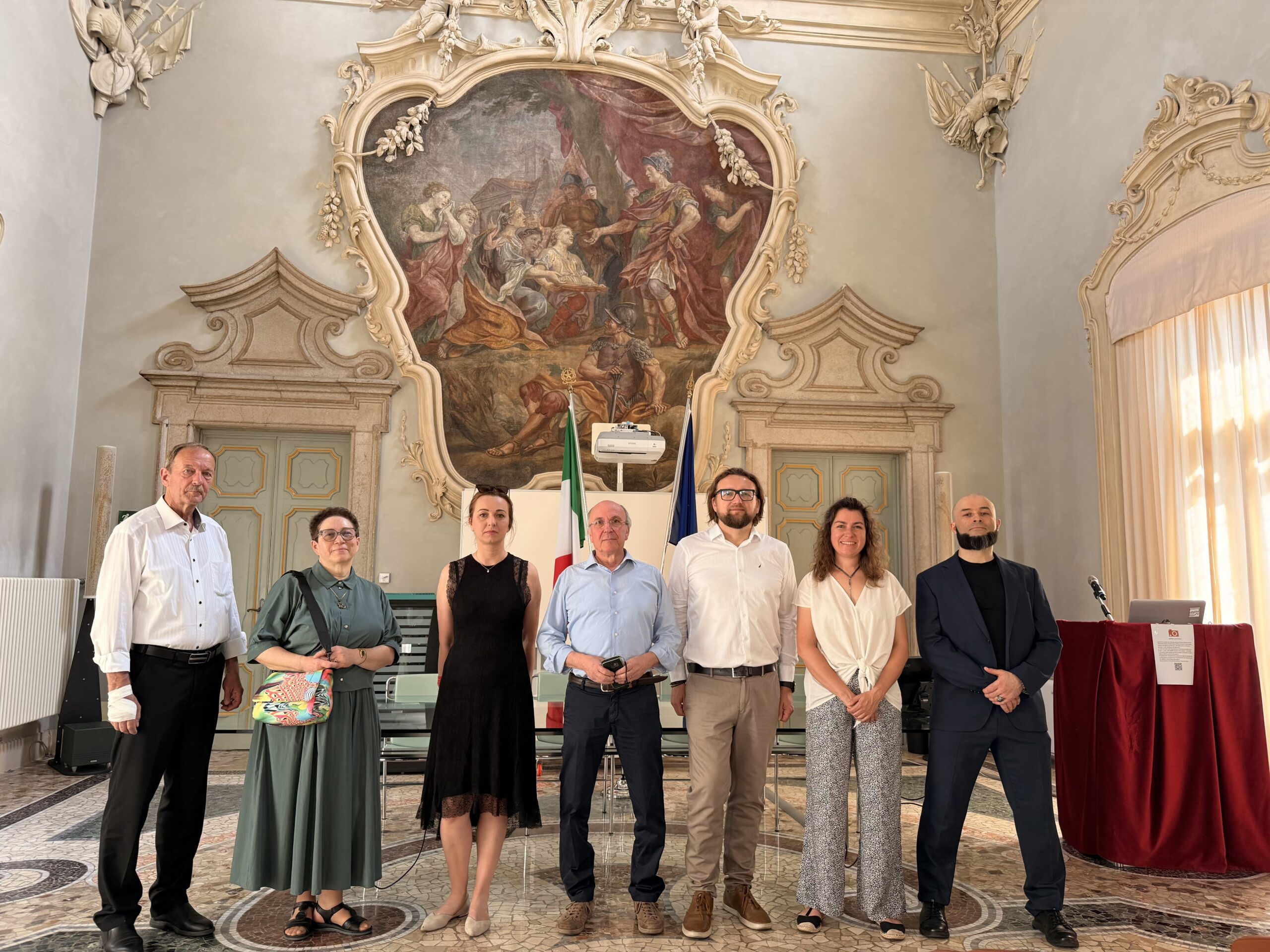
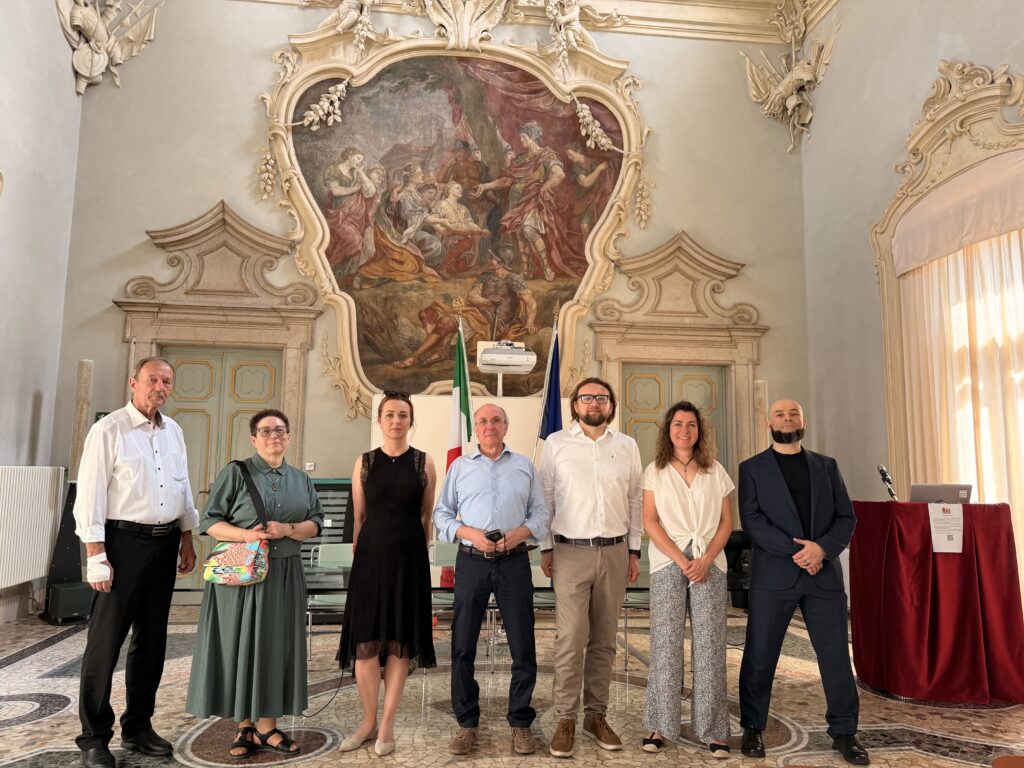
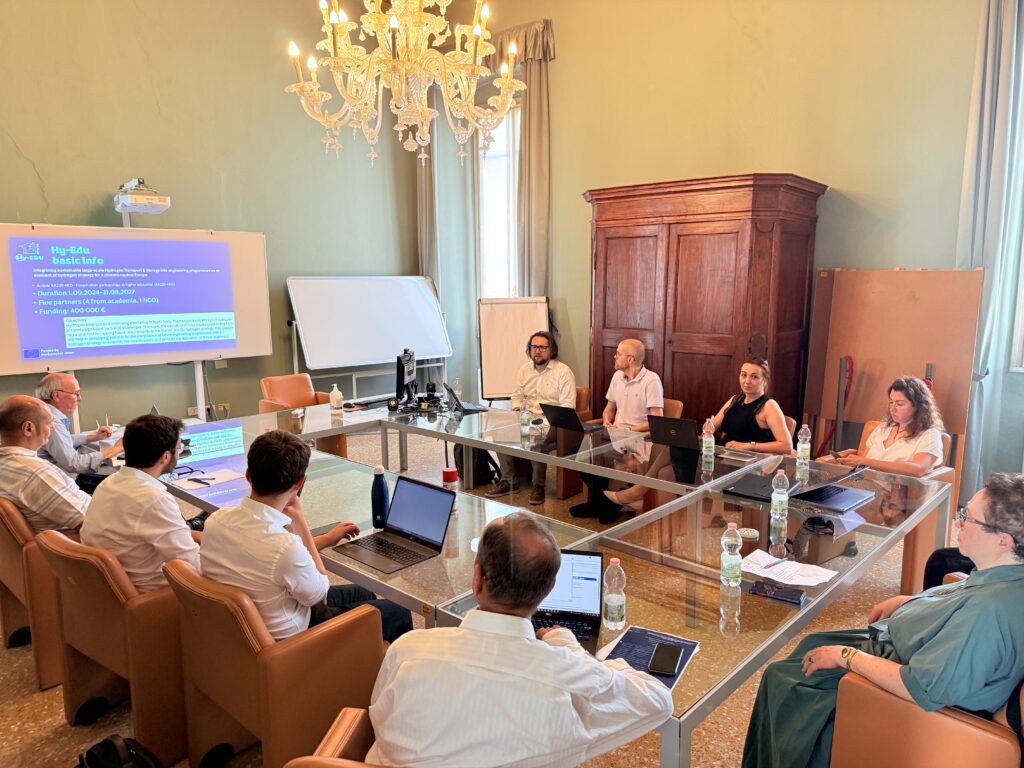
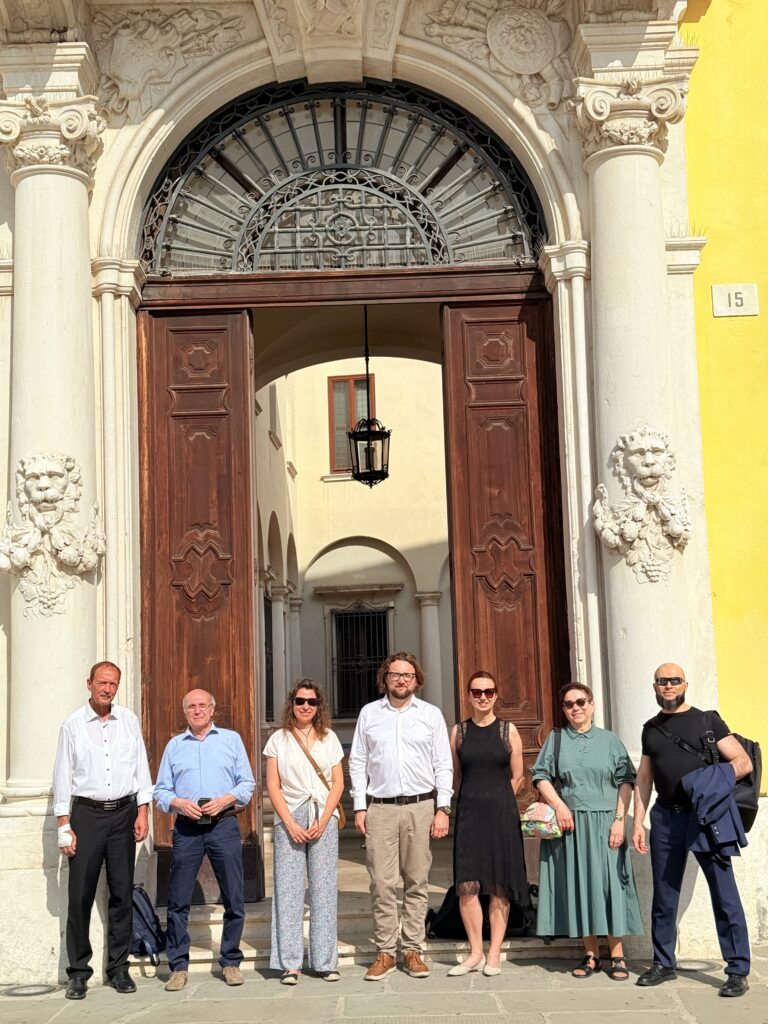
From 28 to 29 May 2026, the University of Brescia (Brescia, Italy) hosted the 3rd progress meeting of the European educational Erasmus+ project Hy-EDU (Hydrogen Education). The project is formally titled “Integrating Sustainable Large-Scale Hydrogen Transport and Storage into Engineering Programmes as an Element of the Hydrogen Strategy for a Climate-Neutral Europe” (official website: hy-edu.eu).
Representatives from the Department of Geology at Tallinn University of Technology (TalTech), CEO of SHOGenergy and director of research at SHOGenergy, Dr Kazbulat Shogenov and Dr Alla Shogenova, respectively, participated in the sessions to review mid-term achievements and coordinate upcoming milestones.
Advancing Next-Generation Hydrogen Education
The project consortium—comprising Tallinn University of Technology (TalTech, Estonia), the Silesian University of Technology (Poland), TU Bergakademie Freiberg (Germany), and the University of Brescia (Italy)—is currently developing a comprehensive online educational course focused on the critical and highly relevant fields of hydrogen transport and geological storage.
During the working sessions, the TalTech team presented the progress achieved in the development of the academic modules under their responsibility:
- Module 4: Geological Storage of Hydrogen
- Module 8: Synergy Concepts
Additionally, the delegation outlined the dissemination activities carried out within the project framework to maximise the initiative’s reach and impact.
Academic Exchange and Research Infrastructure
The meeting was successfully hosted by the University of Brescia. The consortium extends its sincere gratitude to Professor Dr Lucio Enrico Zavanella for his exceptional hospitality and organisation.
Beyond the technical sessions, the partners visited the university’s state-of-the-art laboratory facilities. The delegates gained insights into a diverse range of cutting-edge research activities and experimental setups in fields such as:
- Structural and construction engineering
- Railway systems and machinery safety
- Robotics and advanced energy technologies
- Hydrogen production methodologies
The venue provided an inspiring backdrop for academic collaboration. Operating within the University of Brescia allowed participants to experience the region’s profound historical and cultural heritage—stretching from the Roman Empire to the university’s own architectural landmarks, which feature beautifully preserved 15th-century frescoes, mosaics, and marble artistry.
Acknowledgments
The project partners express their highest appreciation to the project coordinator, Professor Dr Marcin Lutynski, for his productive cooperation and outstanding leadership throughout this phase of the initiative.
The Hy-EDU project is co-funded by the Erasmus+ Programme of the European Union, whose financial support is gratefully acknowledged.
![Read more about the article BCF-2022 (Baltic Carbon Forum 2022) [13-14.10.2022]](https://shogenergy.eu/wp-content/uploads/2022/10/Screenshot-2022-10-14-at-08.38.00-300x214.png)