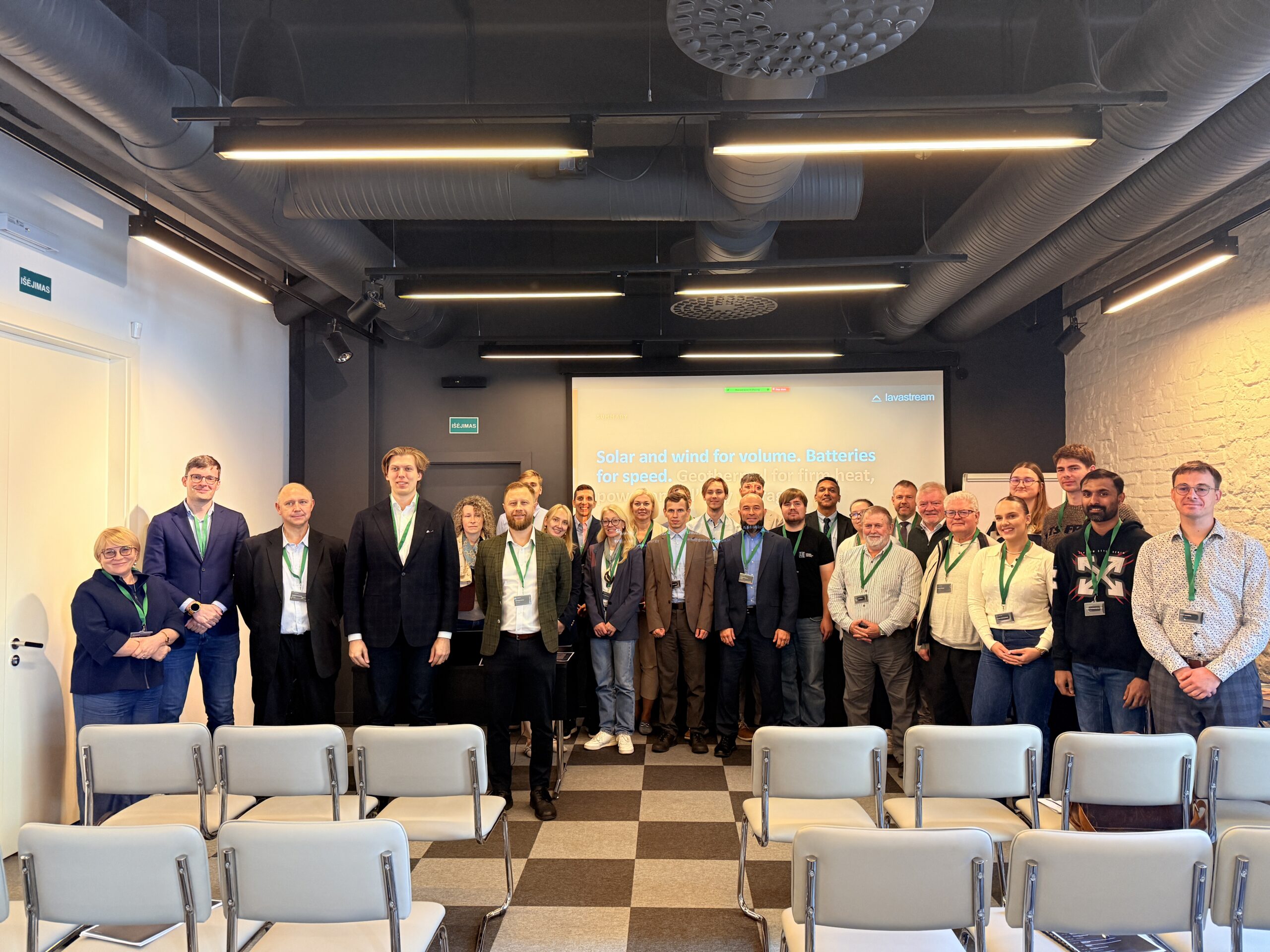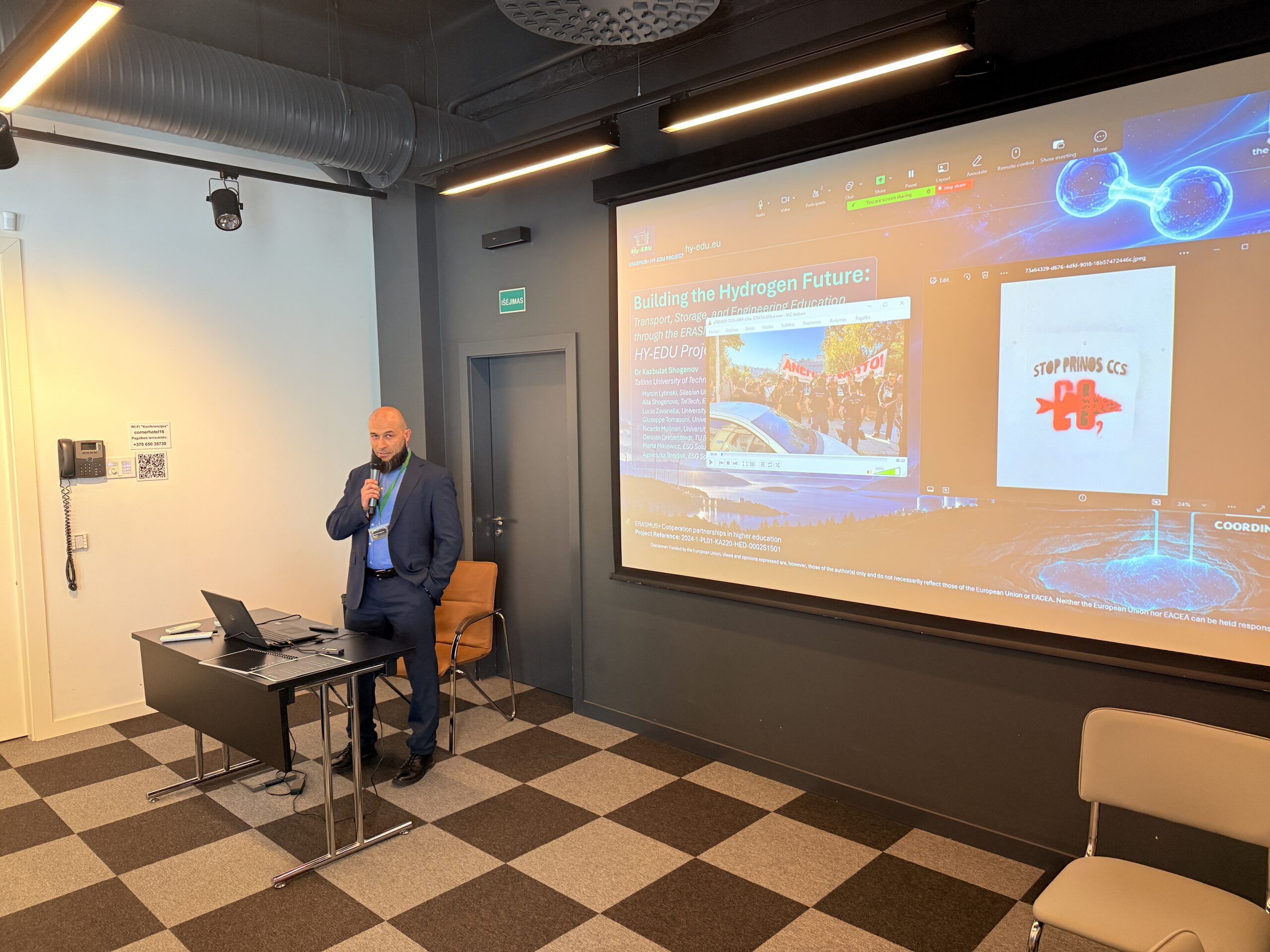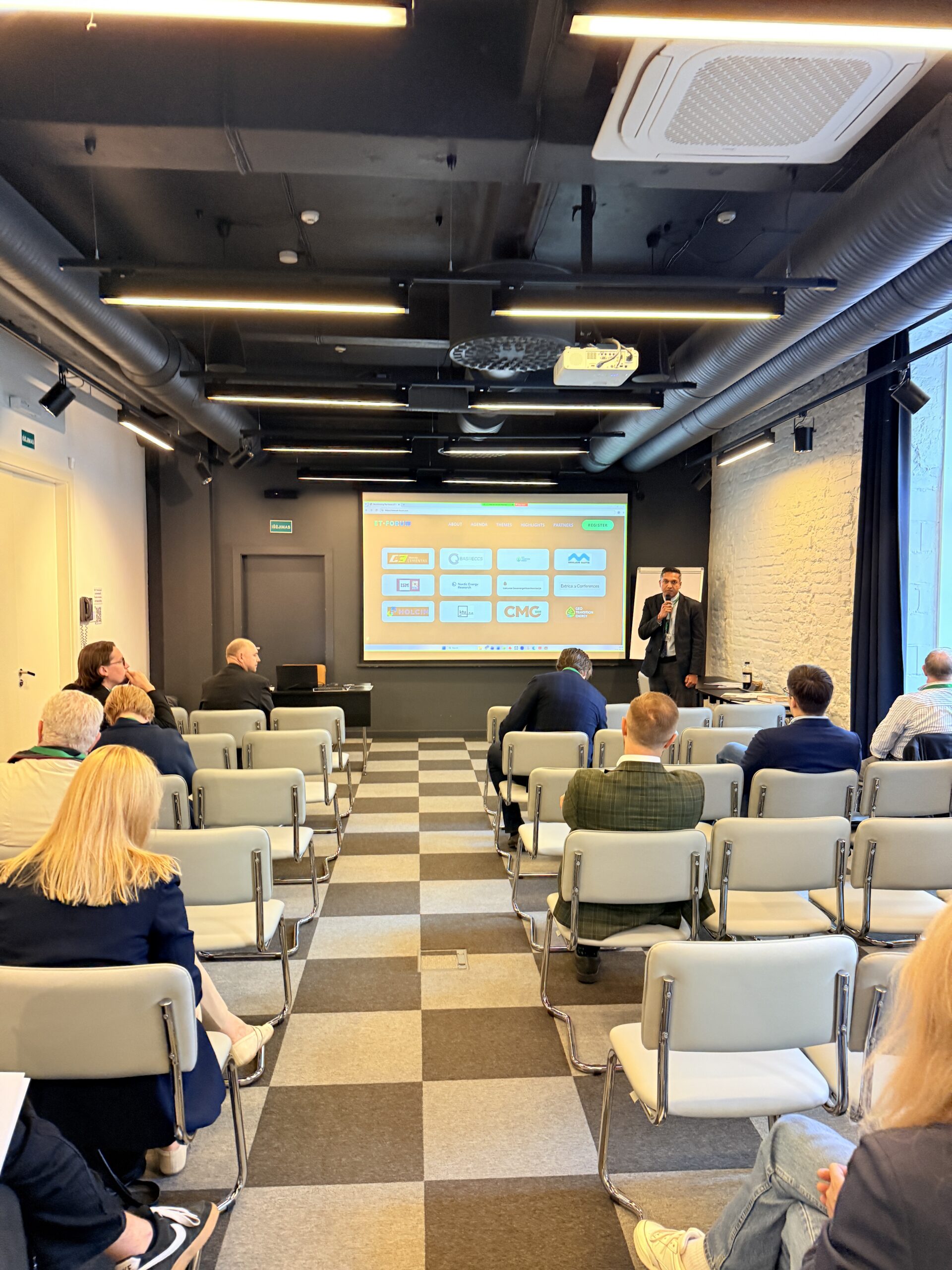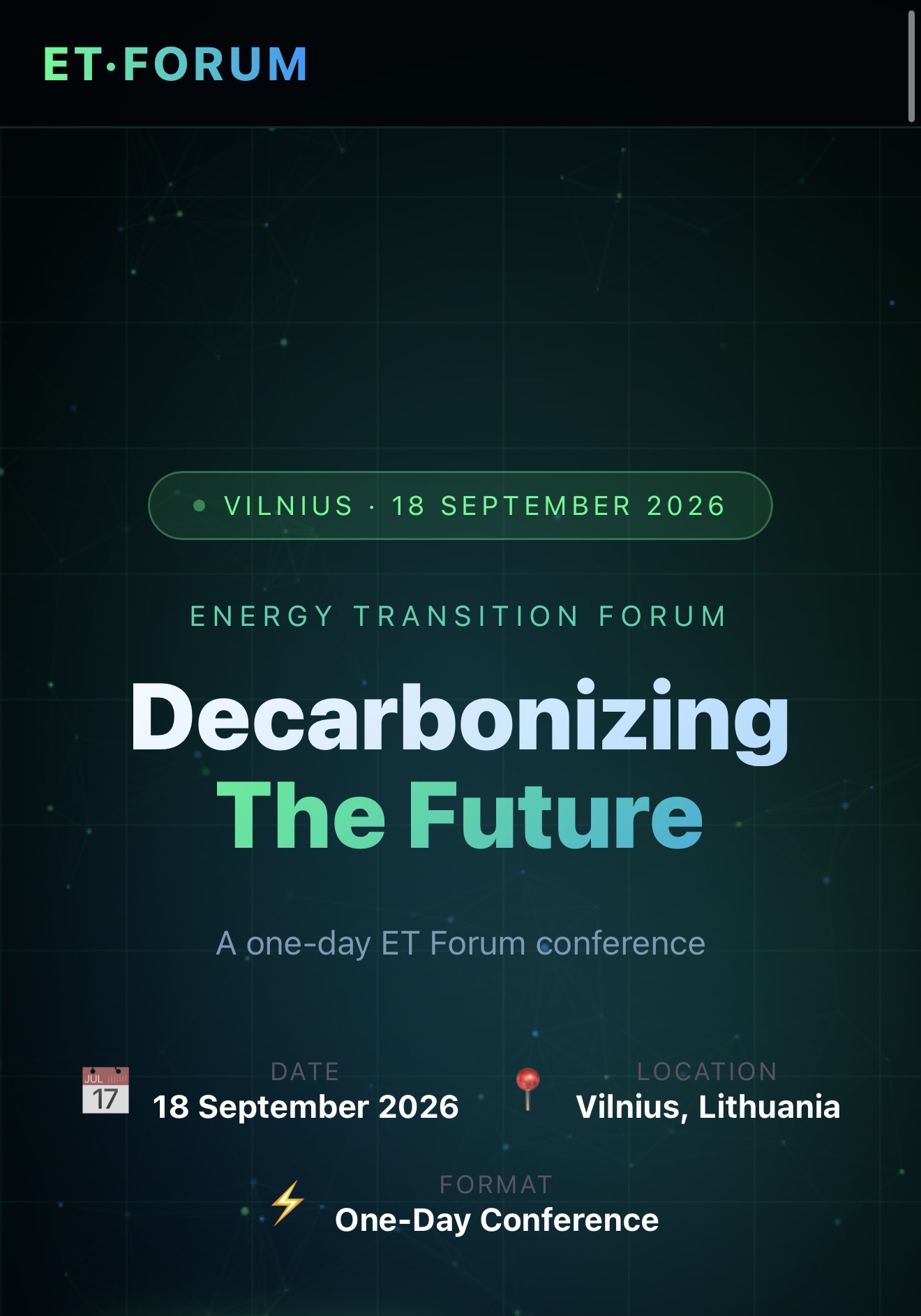
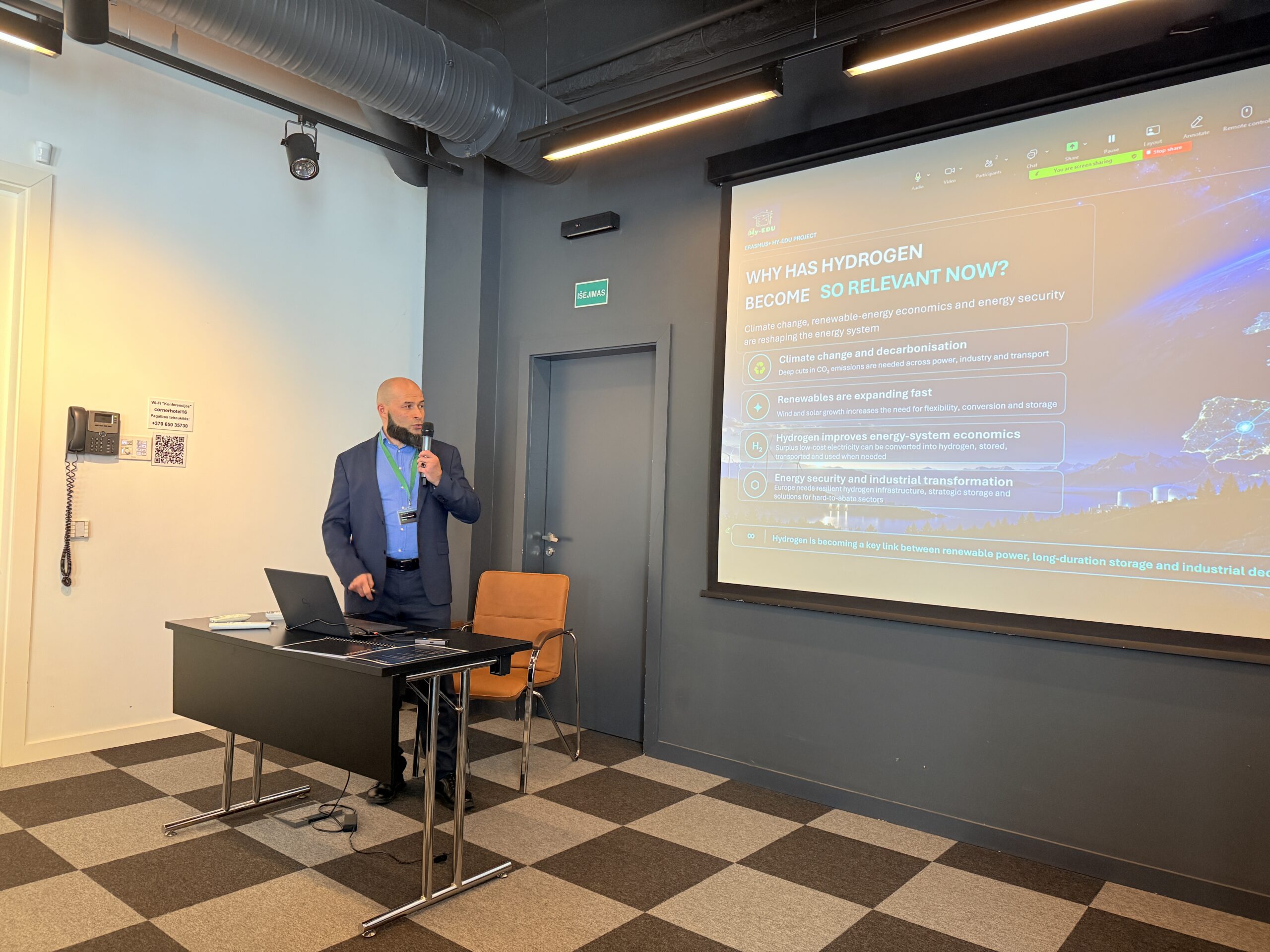
On 18 September 2026, Dr Kazbulat Shogenov, CEO of SHOGenergy and Research Scientist at Tallinn University of Technology (TalTech), participated in the Energy Transition Forum 2026 – Decarbonizing the Future in Vilnius, Lithuania.
The forum brought together representatives of academia, industry and the energy sector to discuss key energy-transition pathways, including renewable energy, hydrogen and Hydrogen Valleys, nuclear energy, CCUS and other low-carbon technologies.
Dr Shogenov represented Tallinn University of Technology, the TalTech Department of Geology and the ERASMUS+ HY-EDU project with the invited presentation:
“Building the Hydrogen Future: Transport, Storage, and Engineering Education through the ERASMUS+ HY-EDU Project.”
The presentation focused on the international e-learning course currently being developed as part of the HY-EDU project. The course will be delivered through a MOOC platform and will address hydrogen transport and storage, including the technical, infrastructural and educational requirements associated with the development of future hydrogen systems.
A central message of the presentation was that the hydrogen transition requires not only new infrastructure and technologies, but also appropriately trained engineers and specialists. Future professionals need to understand the design, operation, monitoring and integration of hydrogen transport and storage systems within wider energy networks.
The presentation also addressed the importance of dissemination, education, and public communication in the implementation of energy transition technologies. Dr Shogenov opened the presentation with photographs taken one day earlier in Kavala, Greece, where a public protest took place during a dissemination event related to planned geological CO₂ storage in Prinos.
This recent example was used to demonstrate that technological readiness alone is insufficient for successful deployment. Public understanding, transparent communication and access to scientifically grounded information are also essential components of the energy transition.
The HY-EDU project addresses this challenge by developing a modern, modular educational programme for universities, lecturers, students, and professionals working with hydrogen technologies.
The forum highlighted the need to integrate technology development, engineering education, scientific communication, and stakeholder engagement to support the practical implementation of low-carbon energy systems in Europe.
Special thanks to Mayur Pal for organising the workshop and to all participants for the discussions and exchange of experience.